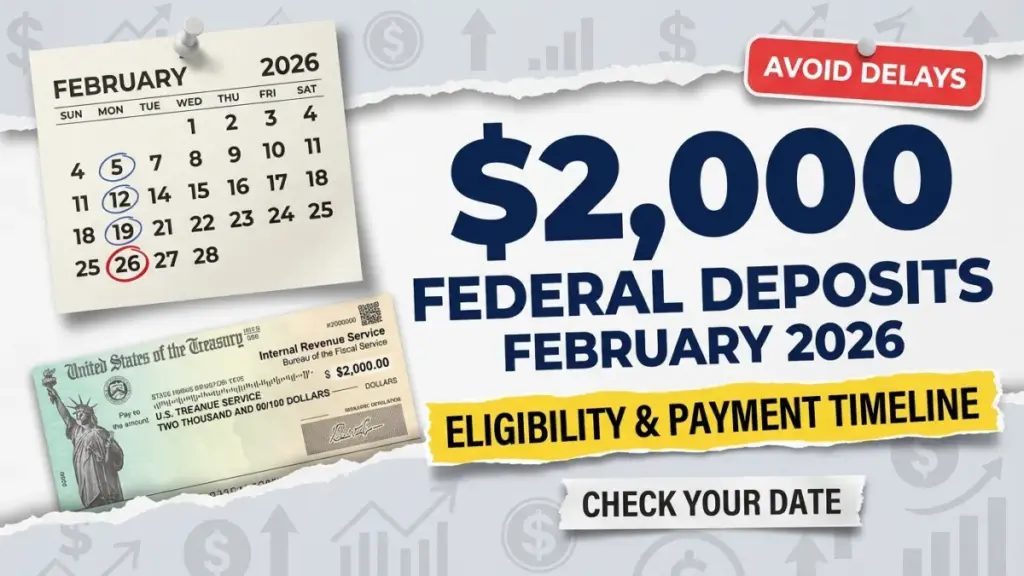
For many Americans, financial security depends on timing. Monthly bills arrive on schedule, grocery prices remain high, and unexpected expenses can appear without warning. That is why news of a possible $2,000 federal direct deposit in February 2026 has created strong interest. For millions of households, this payment could offer short-term relief during a period of rising costs.
At the beginning of the year, budgets are often tight. Heating bills increase during winter months, credit card balances from the holidays may still be unpaid, and everyday essentials continue to cost more. A one-time deposit of $2,000 could help families regain balance and reduce financial stress.
Why the $2,000 Payment Matters
This payment could assist households in covering rent or mortgage payments, utility bills, medical expenses, or groceries. For some, it may help reduce high-interest debt. Others may use it to build a small emergency fund. While it may not solve long-term financial challenges, it can provide breathing room when expenses feel overwhelming.

Beyond the financial value, such a payment also offers emotional comfort. Knowing that basic needs can be covered for the month can ease anxiety and restore confidence.
Who May Qualify for the Payment
Eligibility for federal payments usually depends on income level, tax filing status, and participation in certain federal programs. Social Security retirement beneficiaries, SSI and SSDI recipients, and veterans receiving VA benefits are often considered in relief measures. Low- and middle-income taxpayers may also qualify based on adjusted gross income limits.
Those who have filed their most recent tax return and kept personal information updated are generally in a stronger position to receive payments without delay. Income limits may determine whether a person receives the full amount or a reduced payment.
यह भी पढ़े:
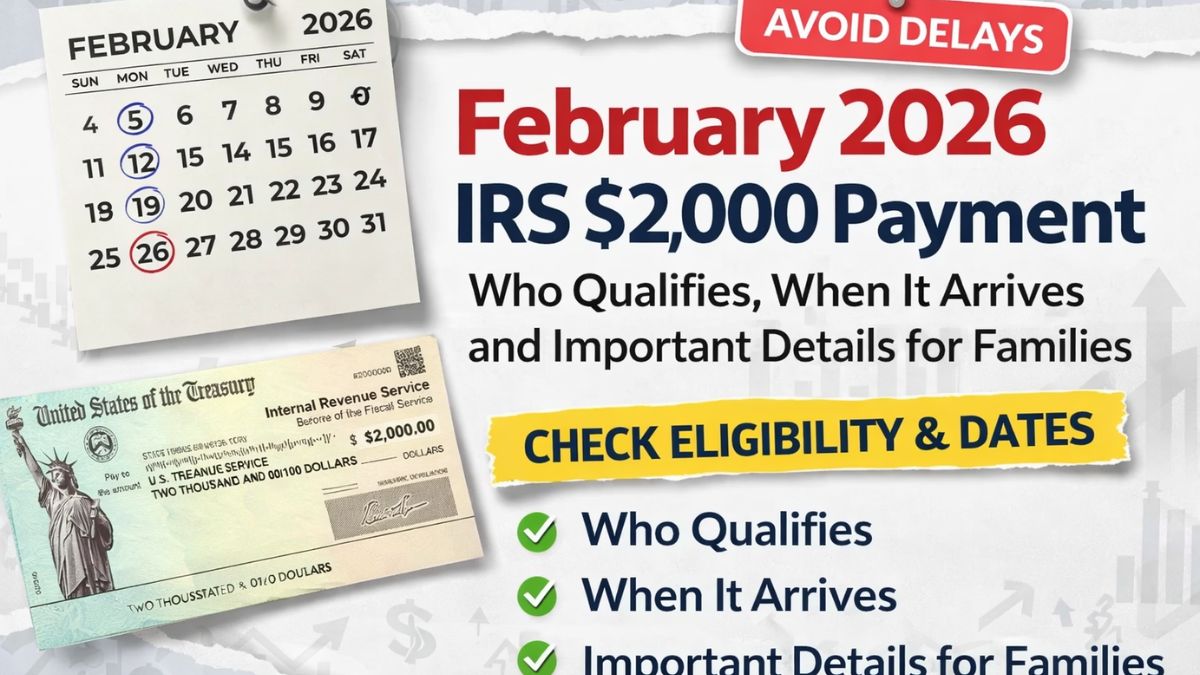
 February 2026 IRS $2,000 Payment — Who Qualifies, When It Arrives and Important Details for Families
When and How Payments May Be Sent
Federal payments are typically distributed in phases. Direct deposits to bank accounts on file often begin first, usually in early February. Additional payments may follow in mid-February for recently verified records. Paper checks and prepaid debit cards are normally mailed later in the month.
Direct deposit remains the fastest way to receive funds. Most electronic payments appear within a few business days after processing.
Steps to Avoid Delays
To help ensure timely payment, individuals should file their latest tax return, confirm that bank account details are correct, and update mailing addresses if needed. Using official IRS tracking tools can also provide updates once the system is active.
A $2,000 federal direct deposit in February 2026 could provide meaningful support to families managing rising expenses. Staying informed and maintaining accurate records are the best ways to prepare.
Disclaimer: This article is for general informational purposes only. Payment eligibility, amounts, and timelines depend on official government announcements and individual circumstances. Readers should verify details through authorized IRS sources before making financial decisions.