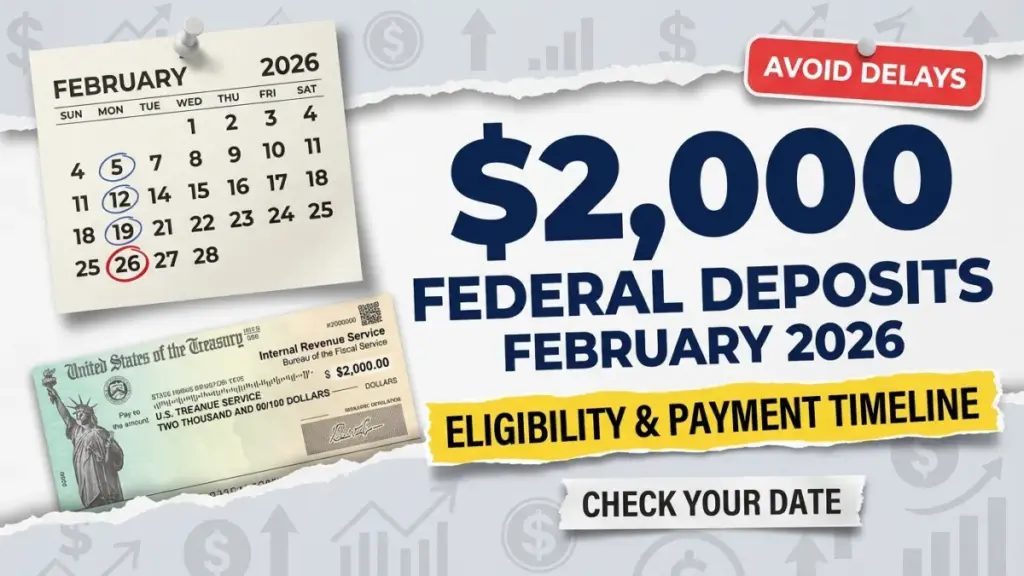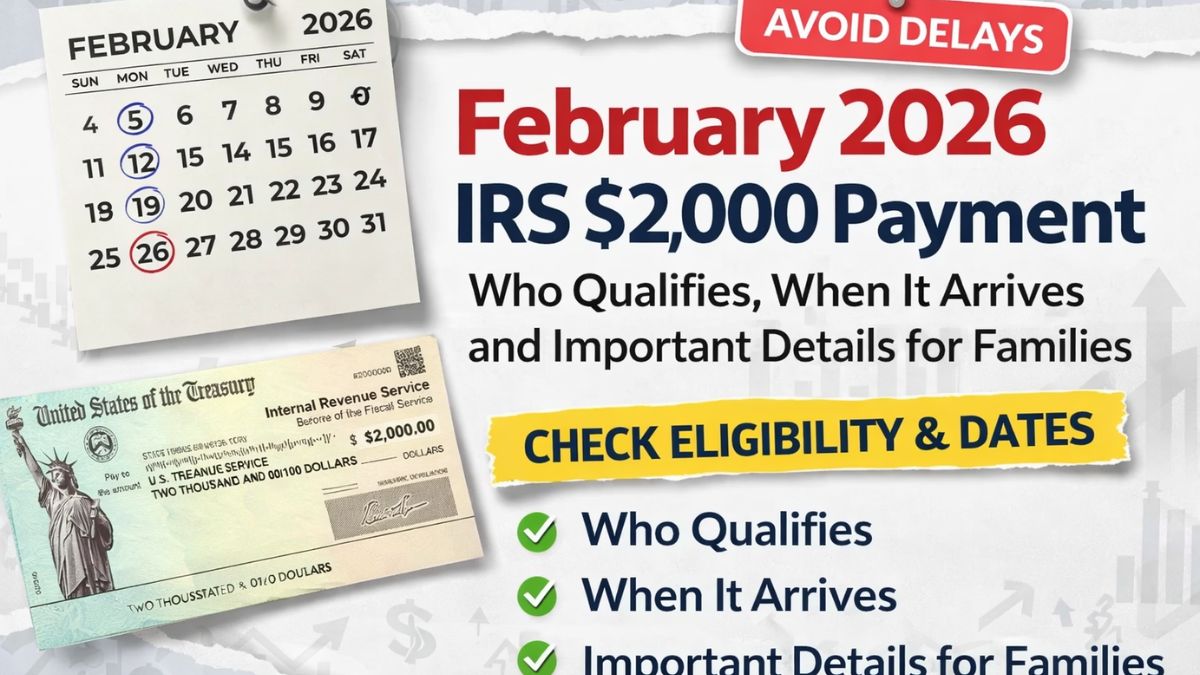
$2,000 IRS Direct Deposit of February 2026: As February 2026 moves forward, many Americans are hearing about a $2,000 IRS direct deposit. For families facing rising costs, the idea of extra financial support brings hope. Rent, groceries, healthcare, and utility bills continue to stretch budgets. Because of this, any payment update quickly becomes important news. Understanding how the process works can help reduce confusion and stress.
Why This Payment Matters to Families
A $2,000 deposit can provide meaningful relief for households managing tight finances. For some, it may cover overdue rent or mortgage payments. Others may use it to handle grocery expenses, medical bills, or credit card balances. For retirees and individuals living on fixed incomes, even one payment can create a sense of stability. Financial support is not just about the amount—it is about the confidence it brings.
Who May Receive the Payment
Eligibility for IRS payments usually depends on income level, tax return records, and federal benefit status. Individuals who have recently filed tax returns and kept their information updated are typically in the best position to receive funds. Social Security recipients, disability beneficiaries, veterans, and low- to middle-income taxpayers are often included in federal payment programs. Income limits usually determine whether someone qualifies for the full amount or a reduced payment.
Payment Timeline and Delivery Method
Federal payments are generally issued in phases. Direct deposits are usually sent first to people whose banking details are already on file. Later in the month, paper checks or prepaid debit cards may be mailed to those without direct deposit. Direct deposit is typically the fastest method, often arriving within a few business days after release.
Checking Your Payment Status
The IRS provides an official tracking tool that allows individuals to confirm eligibility, check payment dates, and see the delivery method. Entering information exactly as it appears on your tax return is important. Delays can happen due to incorrect bank details, recently filed returns, or outdated addresses. Most issues can be resolved by updating records.
The $2,000 IRS direct deposit for February 2026 represents financial relief for many households. By keeping records accurate and monitoring official updates, individuals can help ensure smooth processing. Reliable information and preparation are key to avoiding unnecessary delays.

Disclaimer
This article is for informational purposes only and does not provide legal, tax, or financial advice. Federal payment programs depend on official government approval and eligibility rules. Payment amounts and timelines may vary. Always verify details through official IRS sources or consult a qualified professional for personalized guidance.