$2,000 Federal Direct Deposit: News about a possible $2,000 federal direct deposit has gained attention among taxpayers who want clear information about eligibility and payment status. Federal agencies sometimes issue one-time payments linked to tax credits, relief programs, or special rebate measures. These payments are usually processed automatically using data from recent tax returns or existing benefit records. For families managing rising living costs, knowing whether they qualify is very important.
How Eligibility Is Usually Decided
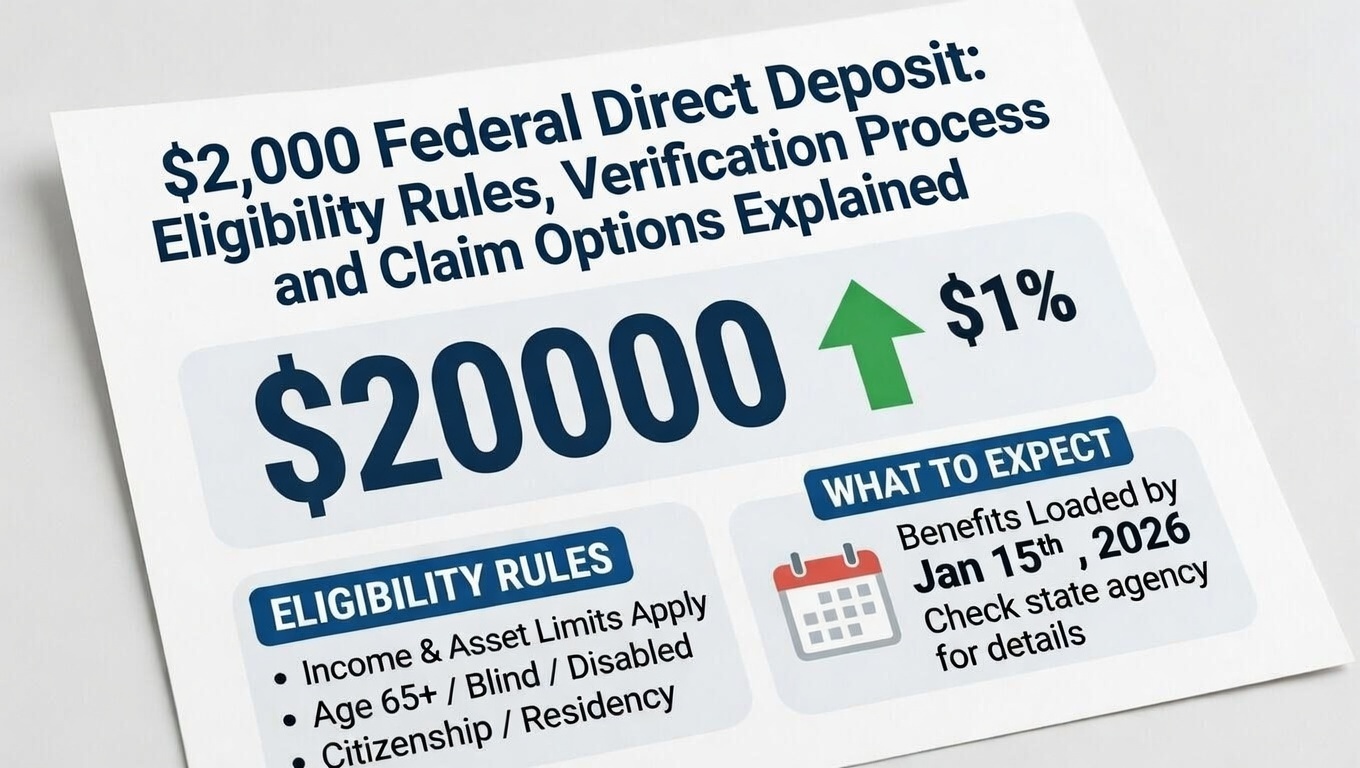
Eligibility for a federal direct deposit often depends on income limits based on adjusted gross income from the latest tax return. Filing status, such as single, married filing jointly, or head of household, may also affect the income threshold. Residency and citizenship requirements can apply as well. In many cases, individuals who have filed recent tax returns or receive federal benefits already have their details in the system, but final qualification depends on official rules.
How Payments Are Processed
When a payment is approved, agencies normally use the bank account information linked to prior tax filings or benefit accounts. If valid direct deposit details are available, the funds are sent electronically. If banking information is missing or outdated, a paper check may be mailed to the address on file. Because these payments are usually automatic, people do not need to complete a new application unless instructed by the agency.
How to Track the Deposit
The easiest way to confirm a $2,000 direct deposit is by checking your bank statement or mobile banking app. The deposit may appear under a federal agency name rather than the specific program title. Some agencies also provide secure online portals where users can log in and review payment status, issue dates, and confirmation details. Checking both bank records and official portals helps avoid confusion.
What to Do If the Payment Is Delayed
If the payment does not arrive on time, the first step is to review eligibility and confirm the official payment schedule. Delays can happen due to identity verification checks, incorrect banking details, or incomplete tax filings. If records show the payment was issued but not received, contacting the appropriate federal agency is recommended. In some cases, a payment trace can be requested to locate or reissue the funds.
Disclaimer
This article is for general informational purposes only. Eligibility rules, payment schedules, and processing timelines may vary based on individual circumstances and official program guidelines. Readers should confirm details through official federal agency sources or consult a qualified financial professional before making decisions.