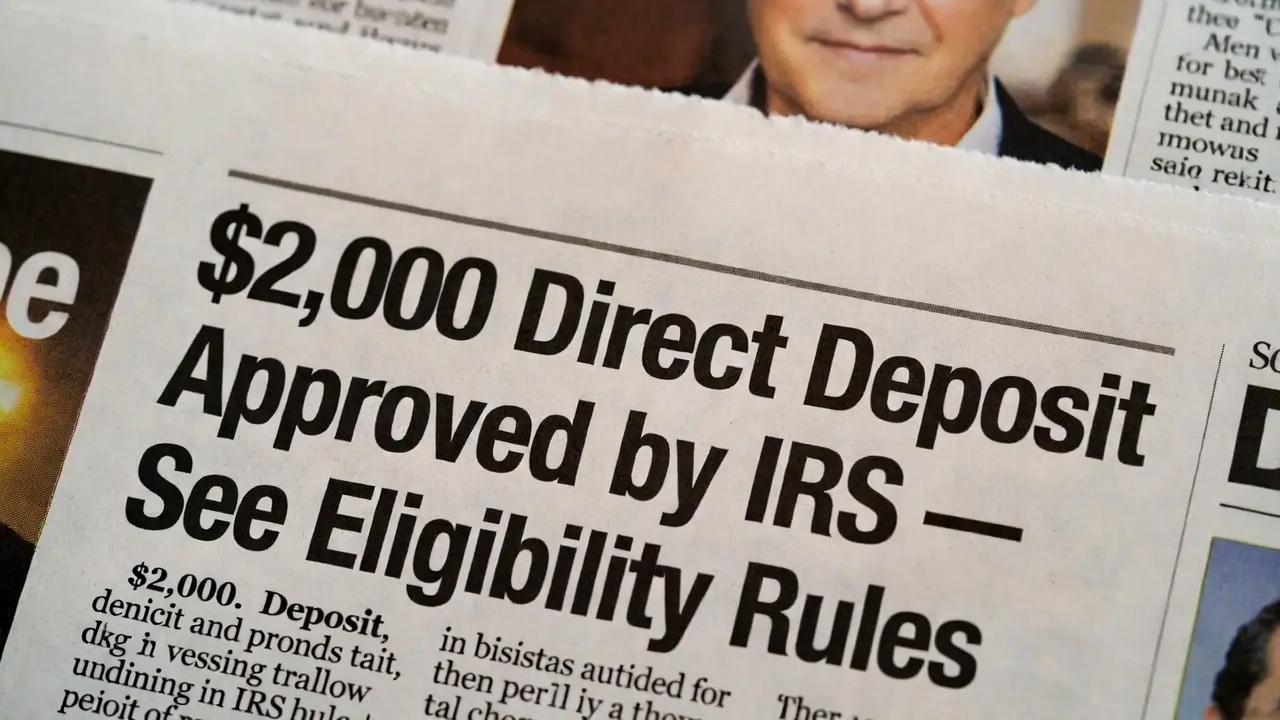
For many Americans, financial stability depends heavily on timing. Monthly bills arrive on schedule, grocery prices continue to rise, and unexpected costs can appear without warning. That is why the announcement of a $2,000 federal direct deposit in February 2026 has created strong interest. For millions of households, this payment represents not only financial help but also a sense of relief during a challenging period.
At the start of the year, many families are still managing holiday expenses, winter utility bills, and everyday living costs. A direct deposit of $2,000 can ease this burden and allow people to handle important payments with greater confidence.
Why This Payment Matters Now
A payment of this size can support different needs depending on each household’s situation. Some families may use it to cover rent or mortgage payments. Others may apply it toward groceries, fuel, or medical expenses. Many individuals plan to reduce credit card balances or create a small emergency fund.
Beyond the financial value, the emotional benefit is just as important. Knowing that support is arriving can reduce stress and provide breathing room in tight budgets.
Who May Be Eligible
Eligibility for federal payments usually depends on income level, filing status, and participation in federal benefit programs. Individuals who recently filed tax returns are generally considered first because their records are up to date. Low- and middle-income taxpayers often qualify for full or partial payments based on income limits.
Social Security retirement beneficiaries, SSI and SSDI recipients, and veterans receiving VA benefits are also commonly included in similar federal payment programs. Households with qualifying dependents may receive additional consideration. Keeping personal and banking information current improves the chances of smooth processing.

Expected Payment Timeline
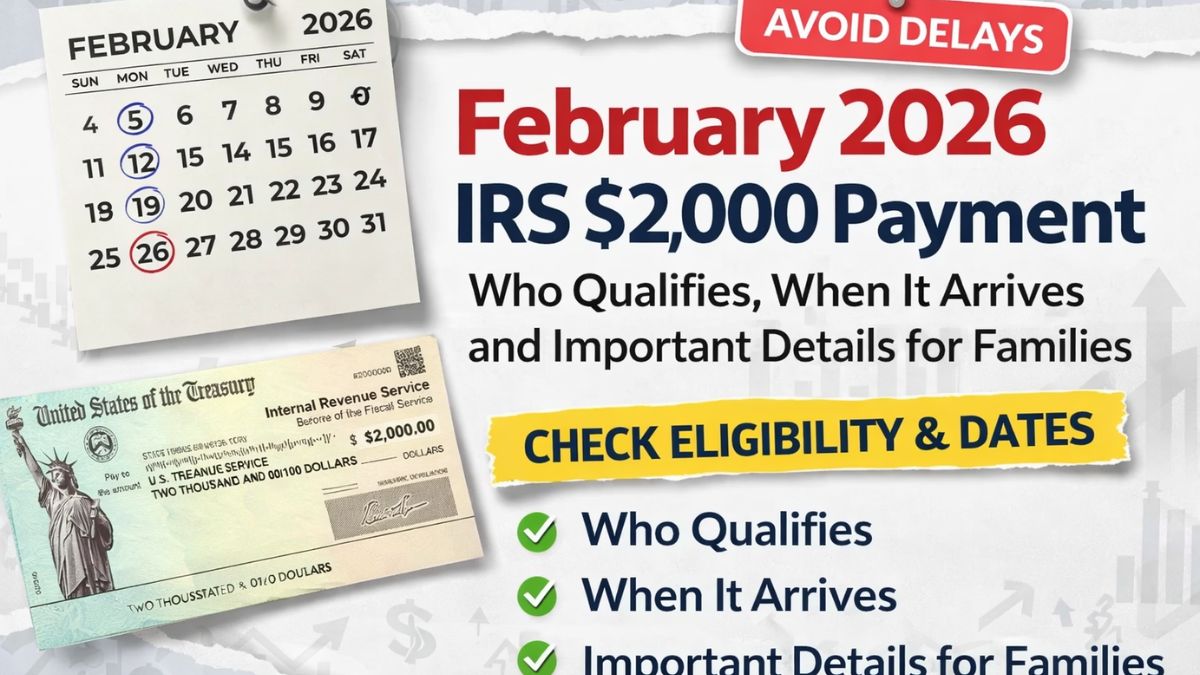
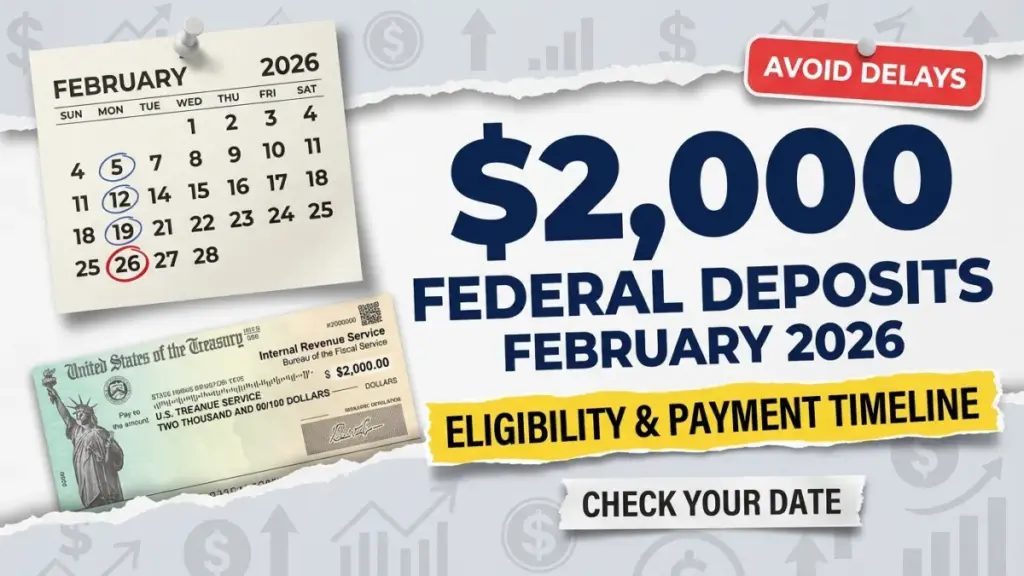
Federal direct deposits are normally issued in phases. Early February may see the first round of deposits sent to bank accounts already on file. Additional payments are often processed in mid-February as records are verified. Those without direct deposit information may receive paper checks or prepaid debit cards later in the month.
Direct deposit remains the fastest and most secure method. Most recipients who use this option typically receive funds within a few business days after processing begins.
Steps to Avoid Delays
Filing the latest tax return, confirming bank account details, and updating mailing addresses can prevent common payment delays. Once available, official tracking tools allow individuals to monitor the status of their deposit. Staying informed through trusted government sources helps reduce confusion and protect against scams.
यह भी पढ़े:
 February 2026 IRS $2,000 Payment — Who Qualifies, When It Arrives and Important Details for Families
The $2,000 federal direct deposit scheduled for February 2026 offers timely assistance to households facing rising expenses. While eligibility rules apply, keeping records updated and understanding the timeline can help ensure smooth delivery. For many Americans, this payment represents more than financial aid—it brings renewed confidence and temporary relief during uncertain times.
Disclaimer: This article is for informational purposes only and does not provide legal, tax, or financial advice. Eligibility, payment amounts, and timelines depend on official government guidelines and individual circumstances. Readers should verify details through authorized IRS sources.