February 2026 IRS $2,000 Payment: As 2026 begins, many American households are dealing with higher living costs. Utility bills, groceries, healthcare, and education expenses continue to place pressure on monthly budgets. Because of this financial strain, reports of a possible $2,000 payment from the Internal Revenue Service have gained strong public attention. For many families, this amount could provide short-term relief during a challenging economic period.
This proposed payment is described as a one-time support measure rather than a long-term benefit program. Its purpose would be to offer temporary financial help to households facing rising costs at the start of the year.
Purpose of the One-Time Federal Relief
The main objective of the $2,000 payment is to support low- and middle-income families who are managing debt or essential expenses. By providing direct cash assistance, the government aims to help stabilize household spending without creating ongoing financial commitments.
Unlike earlier large-scale stimulus programs, this measure is expected to be more targeted. Officials would likely focus on households that demonstrate financial need through recent tax filings. The goal is to provide support while also maintaining broader economic balance.
Eligibility Based on Income and Household Size
Eligibility would likely depend on adjusted gross income reported on the most recent tax return. Households within certain income limits may qualify for the full amount, while higher earners could see reduced payments or no payment at all.
Household size may also play a role in determining eligibility. Families with dependents could receive priority processing or additional consideration. This approach reflects the higher living expenses faced by larger households, especially those supporting children or elderly family members.

How the Payment Would Be Sent
If approved, the IRS would use its existing system to distribute funds. Most eligible individuals would not need to apply separately if their tax records and banking information are already updated. Direct deposit would likely be the fastest way to receive the payment.
Those without direct deposit on file might receive a paper check. However, mailed payments typically take longer. Keeping bank details and mailing addresses current is important to avoid delays.
Expected Timeline and Tracking
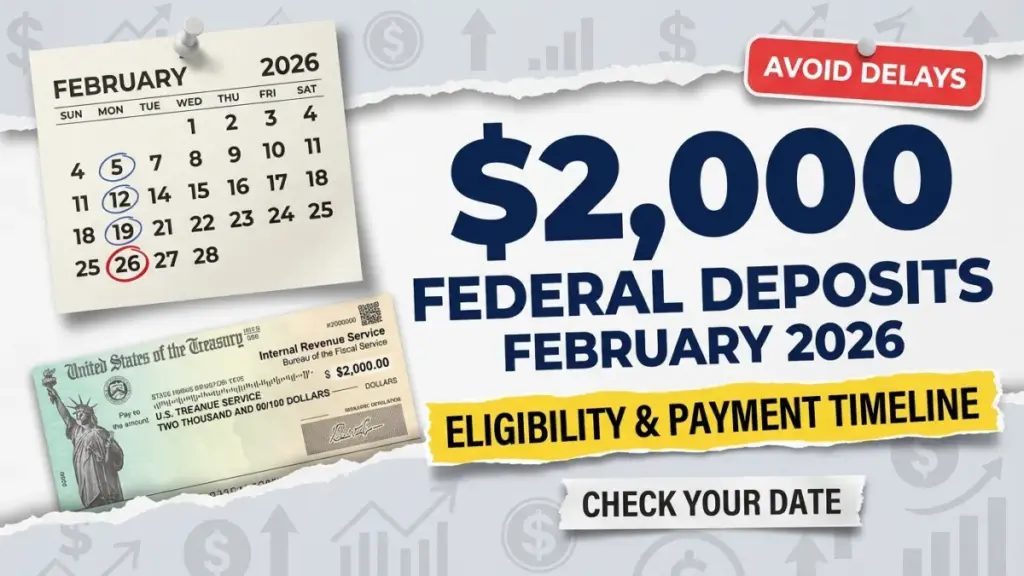
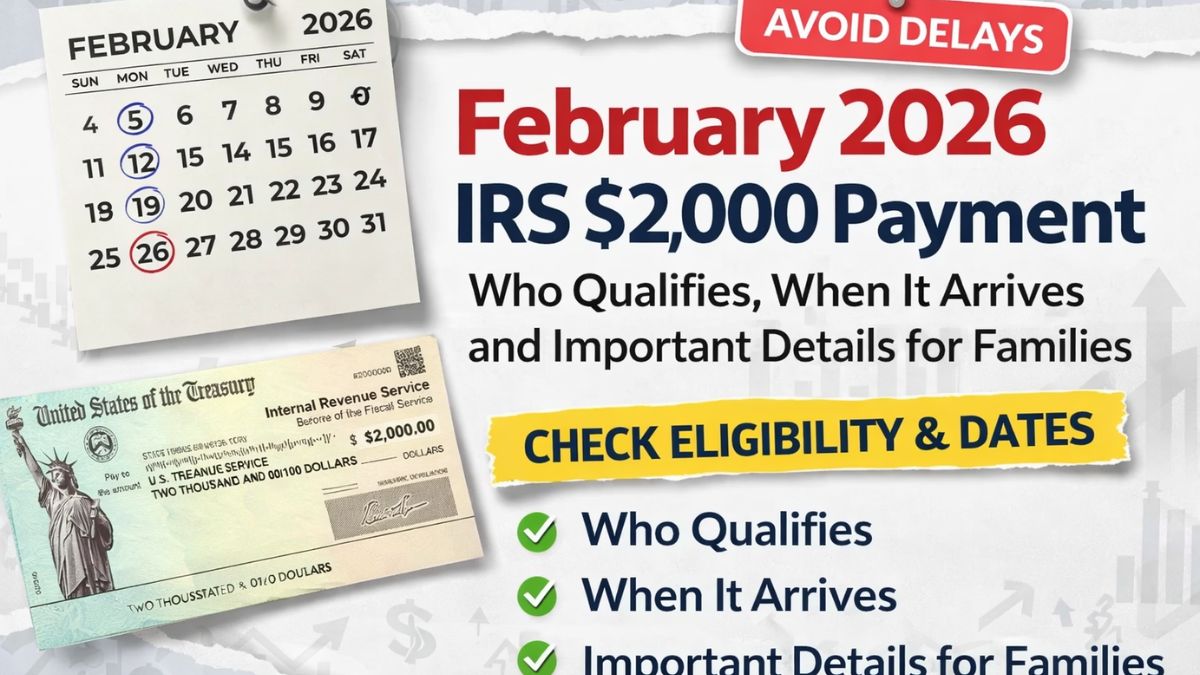
Current discussions suggest that payments could begin rolling out in phases during February 2026. Not everyone would receive funds on the same day, as staggered processing helps manage large transaction volumes.
A digital tracking tool may be made available to allow taxpayers to monitor their payment status. Using official IRS channels is the safest way to confirm eligibility and avoid fraud risks.
Financial Planning Considerations
Although $2,000 can offer meaningful support, it is important to view it as temporary assistance. Many families may choose to pay down high-interest debt, cover essential bills, or strengthen emergency savings. Using the funds wisely can improve financial stability for the rest of the year.
Disclaimer: This article is for general informational purposes only. Eligibility, payment amounts, and distribution dates depend on official government announcements and individual tax circumstances. Readers should verify details through the official IRS website or consult a qualified tax professional for personalized guidance.